In a truly touching atmosphere, full of pride and emotion, took place the awarding of the Lord Byron Philhellenism Medal 2025 on Tuesday, February 4, 2025, to two internationally renowned and acclaimed ladies of Literature, the British author Victoria Hislop and the American poet and Professor of Poetry at the Oxford University, Alicia Elsbeth Stallings.

The distinction of the Lord Byron Medal is an initiative of the Society for Hellenism and Philhellenism since 2021 and in collaboration with the Academy of Athens is awarded, annually, to distinguished persons from the fields of diplomacy, culture and academic education, whose careers have contributed to society with work and actions that are in harmony with the values ​​of Hellenism. Moreover, the medal is also awarded  to descendants of Philhellenes who offered their support during the period of the Greek War of Independence.

The presentation of the diploma and the Lord Byron Medal was made by the President and founder of the Society for Hellenism and Philhellenism, Mr. Constantinos Velentzas, the President of the Academy of Athens, Mr. Michalis Tiverios, and the Secretary General of the Academy of Athens, Mr. Christos Zerefos.

”The Academy of Athens and the Society for Hellenism and Philhellenism wish, through the Lord Byron Medal and Lord Byron Award, to honour the concept of Philhellenism, as an ideal which expression thrived during the 19th century with the support of the Greek Revololution, but its existence and continuity has a timeless definition”, said the President of the Academy, Mr. Michalis Tiverios.

And he continued: “At present day’s laureates, have as their own “excavation site” the ancient Greek Literature and classical studies, and as their constant field of research, the interpretation of the Greek landscape and the people of this land. Both ladies have worked and are working for a number of years, for the promotion of Greek culture and its dissemination as a common point of reference for all of us. Both of them chose to share their lifetime among their countries of origin, their working places, and Greece. For them, as well as for Byron, Greece is their homeland by choice.

” The founder of the Society for Hellenism and Philhellenism, Mr. Constantinos Velentzas, presented to a multitude of people who honoured the ceremony at the  Academy of Athens, the most important stages along the career and the admirable work of the two laureates, characterizing them as “two outstanding personalities of the Letters and the Arts, internationally acclaimed, that throughout their intellectual and social work, they bring to life what is defined nowadays as Contemporary Philhellenism”.

“Victoria and Alicia proudly walk the path blazed by the great Romantic poet, reinforcing, each one with her very own unique writing skills, the ideals of ​​liberty and amity, against all kinds of injustice. Like Byron himself, Victoria Hislop and Alicia Stallings chose to live in this land and by reflecting its history to illuminate modern Greece through their words.”

“When in 2024 Victoria became a fellow of the Royal Society of Literature, she was asked to choose the pen of a distinguished author of her country to sign her entry into the Society. Those pens belonged to Charles Dickens, George Eliot, and Lord Byron. She chose Lord Byron’s, declaring of her choice: I like to imagine that Byron carried it with him on his travels in Greece!’

Inspired by Lord Byron’s well-known phrases Many hearts join together in one common cause and Never fail those who fight for a great cause, Constantinos Velentzas referred to the heartfelt participation of the two laureates in the most emblematic action that took place in October 2024 at the Odeon of Herodes Atticus (Herodeion), in Athens, in order to commemorate the 200th anniversary of the death of the Romantic poet and the Year of Philhellenism, where the breathtaking recitations of Victoria Hislop and Alicia Stallings on stage – along with Lina Nikolakopoulou – brought about the unanimous and enthusiastic response of all spectators.

Victoria Hislop and Alicia Stallings thanked the Society for Hellenism and Philhellenism and the Academy of Athens for their awarding, and reiterated their love for Greece and Hellenic culture, affirming that the spirit of Lord Byron remains ever-present.

In particular, Victoria Hislop referred to Lord Byron and his love for Greece, as well as to his poetry, and as she said “As an author, he managed to write with passion, originality and sincerity, and finally to touch the heart of every reader, thus knowing from his manuscripts that he struggled to find the right words, although the result looks as if it came effortlessly from his pen and it is as if you hear his voice.”

“Lord Byron is a great inspiration to all writers. He, surely, is for me. There are many times that Byron wrote for some important purpose to influence and lead others to action. Rarely were his texts merely for fun. His word for supporting Greece in Europe, was important.”

“If I were to discuss with Lord Byron, my first words would be You succeeded. Your great struggle has been justified.

Alicia Elsbeth Stallings expressed her honour to receive the Lord Byron Philhellenism Medal, especially when this bears the name of the greatest Philhellene of all time. She clarified that “Lord Byron is not known enough for his heroism in English-speaking countries, and he is not known enough for his poetry in Greece. If the Greeks know something about his poetic work, it is usually the first four stanzas of his famous poem, The Isles of Greece“.

And she continued, “Byron, the man of Letters, the greatest comic and satirical poet of his time, and the man of action and political mobilization, were not two different men, but one poet. But Byron knew that both words and deeds, both swords and odes, reach their height, and shine brightest, in the darkest of times.

Poets sharpen words. They help them keep their wits sharp, at a time when tyrants and oligarchs are blunting them with the back-and-forth blows with which they try to tame societies. When the battle seems lost, then more than ever, we need poetry.”

Wishing to strengthen the extroversion of the Academy of Athens, its President, Mr. Michalis Tiverios, stated that for the first time within the context of the collaboration with the Society for Hellenism and Philhellenism, and the awarding ceremony of the Lord Byron Philhellenism Medal, a concert with a multi-member orchestra takes place at the premises of the Academy of Athens.

The Hellenic Air Force Band with its maestro, Mr. Alexandros Litsardopoulos, and with two special and talented performers, the baritone Angelos Mousikas and the soprano Sophia Zova, left the attendees literally dazzled.

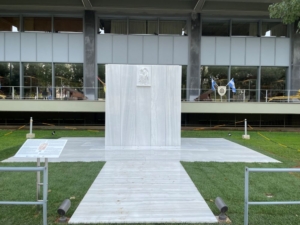
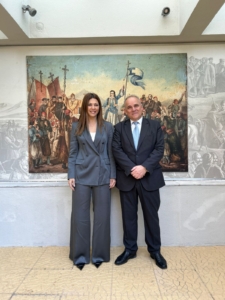
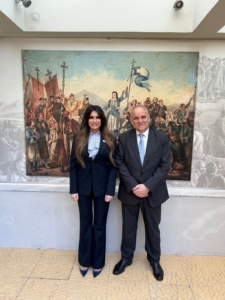
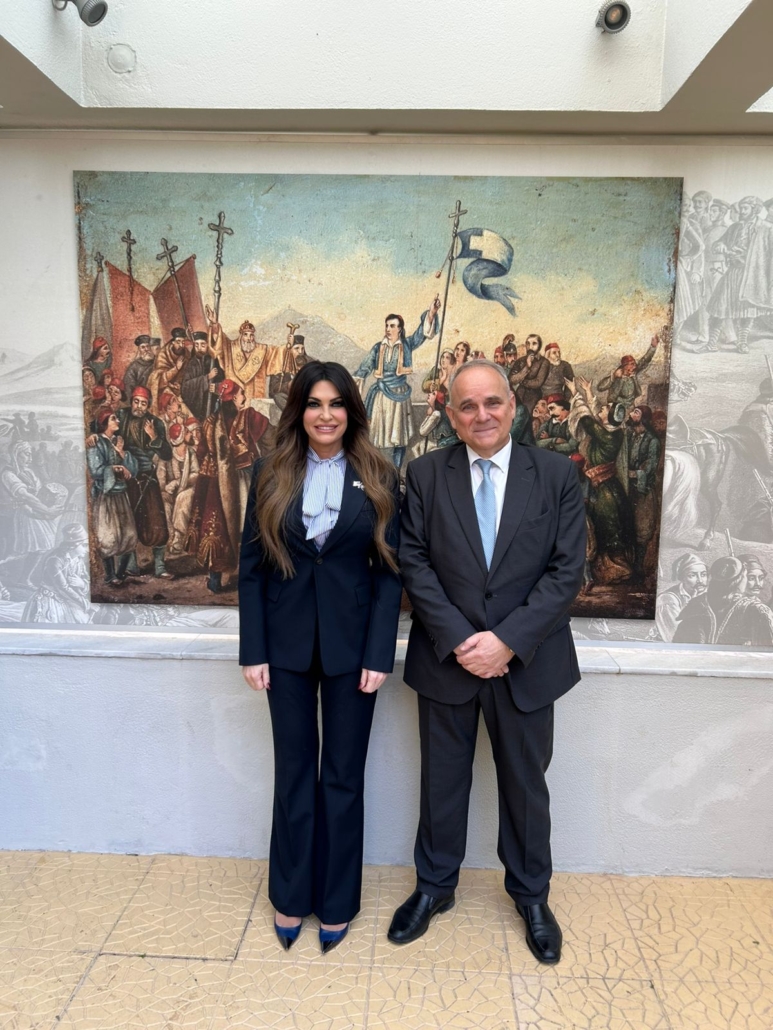
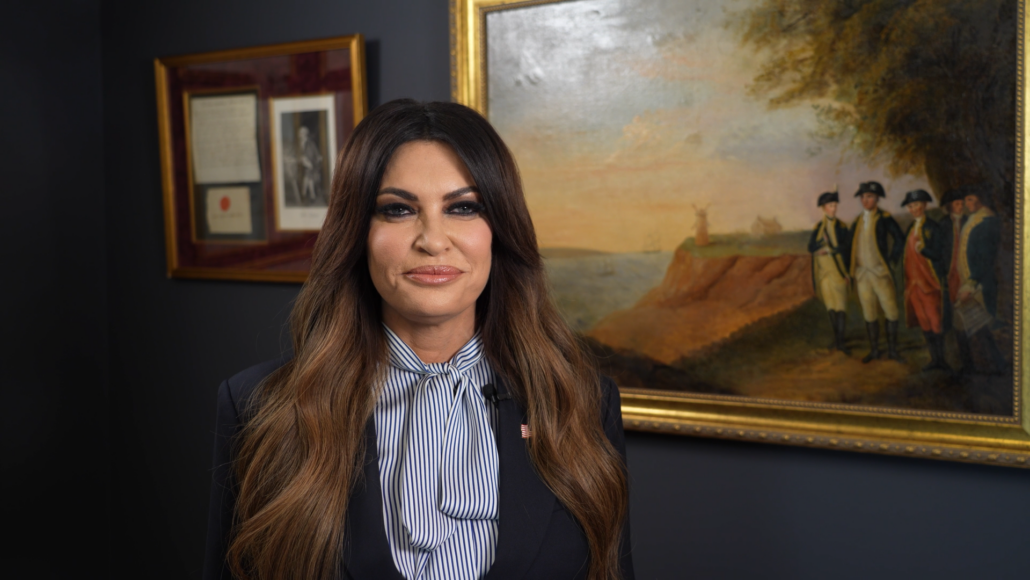
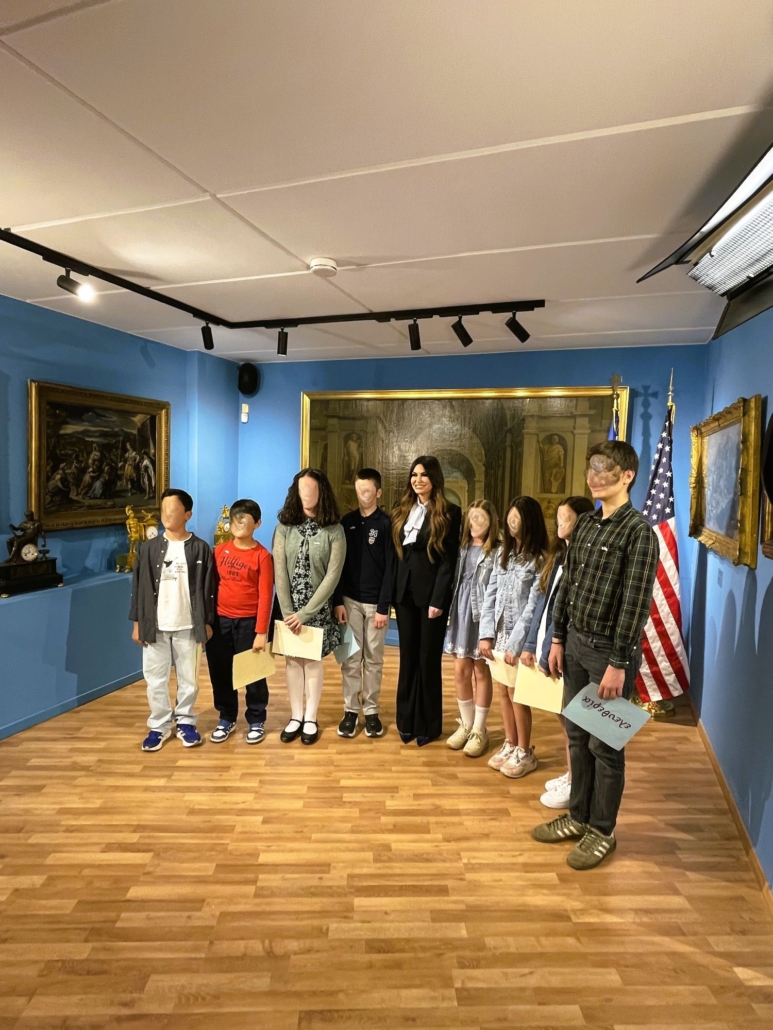
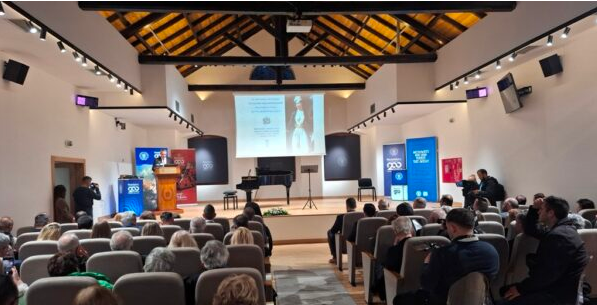
Photos of laureates Victoria Hislop and Alicia Elsbeth Stallings are hereby attached, along with various views of the event.

For further information you may contact: info@eefshp.org and T. +30 2108094750


The Society for Hellenism and Philhellenism (SHP) has instituted since 2021 and awards, in collaboration with the Academy of Athens, the Lord Byron Philhellenism Medal in the name of the great poet and Philhellene, Lord Byron.

The first Lord Byron Medal for 2025 is awarded to the British author and member of the Royal Society of Literature, Victoria Hislop, and to the American Professor of Poetry at the Oxford University, Alicia Elsbeth Stallings, a member of the American Academy of Arts and Sciences.

As part of the award ceremony, a classical music concert will be conducted by the Hellenic Air Force Band in favourite compositions by Verdi, Bizet, Puccini, Léhar and Strauss under the musical direction of Alexandros Litsardopoulos and performances by baritone Angelos Musicas and soprano Sophia Zova. It is the first time that a multi-member orchestra will present a concert at the Athens Academy.

A reception will follow.

An initiative of the SHP, in collaboration and co-organisation with the Academy of Athens and the Philhellenism Museum.

Free admission with reservation required

Limited number of seats

Information and reservation at: info@eefshp.org


The Philhellenism Museum in collaboration with the Center for Hellenic Studies in Greece are organizing the workshop titled “The Reception of the Philhellenic Movement from 1821 until the End of the 19th Century by the Press and Literature of the Time.”

The workshop will take place on 8 & 9 March 2025, 11.00-15.00, at the Philhellenism Museum in Athens.

The academic coordination will be undertaken by Ms. Chrysa Theologou (2024-25 Harvard CHS Fellow in Philhellenism, Adjunct Faculty at the University of Ioannina) and the activity administration by Ms. Matina Goga (CHS Greece).

Limited number of 24 participants

Application period: January 14 – February 14, 2025

Information and applications: https://forms-greece.chs.harvard.edu/reception-of-the-philhellenic-movement-workshop/

The selection of the participants will be made by the workshop coordinator based on their CV and the details they will declare in their online application. Prior knowledge of the subject is not required. Participation in the workshop is free.

The CHS and the Philhellenism Museum will grant the participants a letter of thanks that will certify their participation in the workshop.

All applicants will be notified by February 20, 2025 by email of the progress of their application. Participants need to confirm their participation by email and will be informed of their participation and relevant forms they will need to submit. For clarifications about the workshop and the application process, you can contact the Center Hellenic Studies (+30 27520 47040), daily (10:00 am-5:00 pm).

About the workshop

Overview

The Center for Hellenic Studies in Greece is collaborating with the Philhellenism Museum in organizing the workshop titled “The Reception of the Philhellenic Movement from 1821 until the End of the 19th Century by the Press and Literature of the Time.” CHS Greece, through its annual workshop series, aims to support Hellenic Studies and the broader field of Humanities, and to offer intergenerational, interdisciplinary, lifelong learning opportunities to the public.

This workshop focuses on examining the reception of the Philhellenic movement, which developed throughout much of the 19th century not only in Europe but also in America, through the Greek press. The existence of the Greek Press even before the establishment of an independent Greek state underscores its significance and role in the initiation and progress of the Revolution. In the post-revolutionary years, the notable “expansion” of the press is a remarkable phenomenon directly linked to political and social developments.

Therefore, the reception of the Philhellenic movement by the Greek press, which originated with the Greek Revolution but continued with significant peaks throughout the 19th century, is an important field of research. Its findings are expected to shed more light on the development and spread of Philhellenism.

Based on the above, the workshop aims to delve deeper into the study of this highly significant Philhellenic movement through the press and literature, highlighting lesser-known aspects as revealed in newspaper pages and literary works of the time.

Thematic areas – Workshop structure

The approach to the topic will be organized around the following thematic axes:

  • Pre-revolutionary daily press and the press of the Revolution
  • Literature of the Revolution
  • Creation and evolution of the Philhellenic movement
  • Reception of the movement by the daily press and literature
  • Key milestones in the reception of Philhellenism by the press and literature throughout the 19th century
  • Philhellenism and the Greco-Turkish War of 1897

During the workshop the coordinator will introduce the above topics, and participants will actively engage in discussions. The workshop includes a documentary screening about the significant role of Philhellenes by the Society for Philhellenism and an interactive tour of the museum’s rich Philhellenic collection. Ten days before the workshop, participants will receive relevant reading material that they may optionally study in advance.


The SHP, in collaboration with the Academy of Athens, awarded the Lord Byron Medal to 3 distinguished British Philhellenes, in a ceremony that took place on 16 November 2024, at Trinity College, Cambridge University.

The medal was awarded to:

  • Sir Roderick Beaton FBA (Emeritus Koraes Professor of Modern Greek and Byzantine History, Language and Literature, King’s College London)
  • Dr John Kittmer (Former Ambassador of the United Kingdom to the Hellenic Republic)
  • Kate Lucy Smith CMG (Former Ambassador of the United Kingdom to the Hellenic Republic)

The medals were presented by the President of the SHP, Mr. K. Velentzas, and the Academician and Professor at Cambridge, Mr. A. Fokas.

The event was welcomed by Professor Louise Merrett, Vice Master of Trinity College, Cambridge, and Professor Napoleon Katsos, of the Centre for Greek Studies, Cambridge.

For information: info@eefshp.org


Rosa Botsari, daughter of the great fighter of the Greek Revolution, Markos Botsaris, both symbols of the struggle for freedom and independence, central figures of Philhellenic art internationally. This important portrait of the great Philhellene artist Joseph Karl STIELER will be housed as of 2025 in the Philhellenism Museum in Athens.


The SHP (eefshp.org) and the Philhellenism Museum (phmus.org) participate in the 25-member Honorary Committee for the organisation of events and activities dedicated to the 200th anniversary of the Exodus.

The Exodus of Missolonghi is the leading moment of the Greek War of Independence, which inspired all civilized humanity, gave maximum impetus to the philhellenic movement and triggered diplomatic processes that led to the Treaty of London, the naval battle in Navarino and the establishment of the independent Greek state.

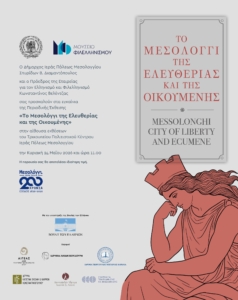
The SHP and the Philhellenism Museum will organise a major exhibition at the Academy of Athens, an emblematic concert and a series of events and publications in Greece and internationally, to highlight the effect that the heroic Exodus had on the development of Philhellenism and international solidarity in favor of nations struggling for their freedom and the values ​​of Western civilization.

Information: info@eefshp.org


On Saturday, November 16, 2024, an event and concert took place in Stuttgart, organized by the Greek Community in Germany e.V. (Omogeneia). The event aimed to highlight the deep cultural relations between Greece and Germany.

Speakers at the event included the President of Omogeneia Konstantinos Kahrimanidis, the Vice-President of the SHP (Society for Hellenism and Philhellenism), Professor Costas Papailiou, the Consul General of Greece in Stuttgart, Mrs. Maria Kehri, and the German historian Frank Ackermann. Messrs. Ackermann and Papailiou presented German philhellenism, focusing on the German Philhellenes of Stuttgart and the historical contribution of Norman von Ehrenfels, general of the Greek regular army and Philhellenic forces during the Greek struggle for independence (1822).

The event was attended by descendants of Norman von Ehrenfels, and Daniel Elster, another prominent Philhellene, who fought in the Battle of Peta and on other fronts. In this context, Professor Papailiou, as Vice-President of SHP, awarded the Lord Byron medal to Mrs. Angela Lehman, a descendant of Count Norman von Ehrenfels.

The musical part of the evening began with the German Philhellenic Choir under the direction of Matthias Bretschneider, who performed German songs from the time of the Greek Revolution.

For information: info@eefshp.org


The premiere of the play entitled “Byron. The farewell. Messolonghi 1824” took place in the Amphitheatre of the War Museum. The play, which moved and impressed the audience, deals with the last days of Lord Byron in Messolonghi.

The two theatrical performances were offered to the public of Athens with free admission, by the Society for Hellenism and Philhellenism (SHP) and the Philhellenism Museum, in collaboration with the War Museum and under the auspices and support of the British Embassy in Athens. Other presentations of the play are planned to follow in Greece and abroad.

The event was addressed by the president of the War Museum, Mr. Konstantinos Karamesinis, the president and founder of SHP and the Philhellenism Museum, Mr. Constantinos Velentzas and the attaché of the British Embassy, ​​Ms. Katharina Arnold.

Mr. Velentzas prefaced the performance by outlining the historical context of the era to the audience, highlighting unknown details about the volunteer military and medical scientists who were by the side of the British Philhellene in the last days of his life.

The plot of the play was focused on a final account of the life and work of the Romantic poet, filled with the ideals of struggle and freedom, and the search for the higher meanings of human existence.

Emilianos Stamatakis, one of the most distinguished and talented actors of his generation, captivated the audience with his performance as Lord Byron. The role of Byron’s loyal valet, Fletcher, was performed by Pericles Lianos, who is particularly loved and known through his television roles.

The scenario is written by Iordanis Kalesis and directed by Vassilis Kontaxis. In addition, an original music by Angeliki Della was especially composed for the play, while the lyricism and unparalleled interpretive skill of soprano Angeliki Vardaka captivated the audience.

The play incorporates elements of cinematography, directed by the award-winning artist Thanos Angelis, while Pantelis Konsolakis was charged with the photography direction.

The Romantic poet who was the greatest Philhellene of all times, inspired and inspires the movement of Philhellenism internationally. His sudden death at the age of 36 was a global event, which moves the new generations to this day. Byron’s unconventional temperament, is a starting point to discover at the same time his literary intelligence, which even today influences fiction and artistic creation.

The intention of the SHP – Philhellenism Museum and the contributors, is the tour of the play in other cities in Greece and abroad.


Byron. The Farewell, Messolonghi 1824

Under the auspices and support of the British Embassy

Author: Iordanis Kalesis | Direction – stage plan: Vassilis Kontaxis | Original Music – piano: Angeliki Della | Film direction and costume design: Thanos Angelis | Director of photography: Pantelis Konsolakis | Research advisor: Dr. Zambia Agrimaki | Lighting: Thodoris Gogos

Cast:

Kostas Gerantonis | Iordanis Kalesis | Dimitris Pneumatikos | Ilias Sardellis | Special guest: Pericles Lianos | Soprano Angeliki Vardaka

Emilianos Stamatakis as Lord Byron


The Society for Hellenism and Philhellenism (SHP – www.eefshp.org) and the Philhellenism Museum in Athens (www.phmus.org), are pleased to invite you to the original theatrical performance entitled “Byron. The Farewell, Messolonghi 1824”.

The play reflects upon the last days of Lord Byron in Messolonghi and will be offered for two (2) unique performances, with free admission, on October 31 and November 1, 2024, at 8:00 p.m., in the Amphitheatre of the War Museum of Athens.

2024 marks the bicentenary from Lord Byron’s death. The major Romantic poet was the greatest Philhellene, who with his untimely death at the age of 36, inspired the movement of Philhellenism internationally and the support of the Greek Revolution, which led to the free Greek state.

Summary of the play

The rebellious British aristocrat in April 1824 is in Messolonghi, defending the liberation of Greece. An unspecified illness afflicts him strongly and the most famous doctors of Europe arrive to assist him in his treatment, a vain attempt. His sudden death caused a global shock, which moved people around Europe and America, while Greece recorded him as a national hero.

Thursday, October 31 & Friday, November 1, 2024, 20:00
Amphitheatre of the War Museum
Rizari 2-4, Athens – Metro Station “Evangelismos”

Free admission by invitation
For reservations: info@eefshp.org


Written by: Iordanis Kalesis | Directed by: Vassilis Kontaxis | Original music & piano: Angeliki Della | Cinematography & costumes: Thanos Angelis | Photorgaphy: Pantelis Konsolakis | Research advisor: Dr. Zambia Agrimaki | Lighting: Thodoris Gogos

Cast:
Kostas Gerantonis | Iordanis Kalesis | Dimitris Pneumatikos | Elias Sardellis | special guest: Periklis Lianos | soprano Angeliki Vardaka
Emilianos Stamatakis as Lord Byron


The naval battle at Navarino successfully seals the liberation struggle of the Greeks, and paves the way for the establishment of the independent Greek state. The driving force behind this great victory is clearly the British Prime Minister Georges Canning, who, before he died in August 1927, gave clear instructions to Admiral Codrington to implement the London treaty even by force of arms.

But how many of us know that Canning was a true Philhellene, and a poet influenced by Lord Byron, with a real interest in the Greeks, who also wrote a poem entitled “the slavery of Greece”? On the occasion of the anniversary of the naval battle of Navarino, we present from the collection of the Philhellenism Museum the translation into French of a book containing George Canning’s poetry collection including the following poem dedicated to Greece.


The Slavery Of Greece

Unrivall’d Greece! thou ever honor’d name,
Thou nurse of heroes dear to deathless fame!
Though now to worth, to honor all unknown,
Thy lustre faded, and thy glories flown;
Yet still shall Memory, with reverted eye,
Trace thy past worth, and view thee with a sigh.

Thee Freedom cherish’d once with fostering hand,
And breath’d undaunted valour through the land;
Here, the stern spirit of the Spartan soil,
The child of poverty, inur’d to toil.

Here, lov’d by Pallas and the sacred Nine,
Once did fair Athens’ tow’ring glories shine,
To bend the bow, or the bright faulchion wield,
To lift the bulwark of the brazen shield,
To toss the terror of the whizzing spear,
The conqu’ring standard’s glitt’ring glories rear,
And join the mad’ning battle’s loud career.

How skill’d the Greeks; confess what Persians slain
Were strew’d on Marathon’s ensanguin’d plain;
When heaps on heaps the routed squadron fell,
And with their gaudy myriads peopled hell.
What millions bold Leonidas withstood,
And seal’d the Grecian freedom with his blood;
Witness Thermopylæ! how fierce he trod!
How spoke a hero, and how mov’d a God!
The rush of nations could alone sustain,
While half the ravag’d globe was arm’d in vain.
Let Leuctra say, let Mantinea tell,
How great Epaminondas fought and fell!

Nor war’s vast art alone adorn’d thy fame,
“But mild philosophy endear’d thy name.”
Who knows not, sees not with admiring eye,
How Plato thought, how Socrates could die?

To bend the arch to bid the column rise,
And the tall pile aspiring pierce the skies;
The awful scene magnificently great,
With pictur’d pomp to grace, and sculptur’d state,
This science taught; on Greece each science shone:
Here the bold statue started from the stone;
Here, warm with life, the swelling canvass glow’d;
Here, big with life, the poet’s raptures flow’d;
Here Homer’s lip was touch’d with sacred fire,
And wanton Sappho tun’d her am’rous lyre;
Here bold Tyrtæus rous’d th’ enervate throng
Awak’d to glory by th’ inspiring song;
Here Pindar soar’d a nobler, loftier way,
And brave Alcæus, scorn’d a tyrant’s sway;
Here gorgeous Tragedy, with great controul,
Touch’d every feeling of th’ impassion’d soul;
While in soft measure tripping to the song,
Her comic sister lightly danc’d along—

This was thy state! But oh! how chang’d thy fame,
And all thy glories fading into shame.
What! that thy bold, thy freedom-breathing land,
Should crouch beneath a tyrant’s stern command;
That servitude should bind in galling chain;
Whom Asia’s millions once oppos’d in vain,
Who could have thought? Who sees without a groan,
Thy cities mould’ring and thy walls o’erthrown?
That where once tower’d the stately solemn fane,
Now moss-grown ruins strew the ravag’d plain;
And unobserv’d but by the traveller’s eye
Proud vaulted domes in fretted fragments lie;
And thy fall’n column on the dusty ground,
Pale ivy throws its sluggish arms around.

Thy sons (sad change!) in abject bondage sigh;
Unpitied toil, and unlamented die;
Groan at the labours of the galling oar,
Or the dark caverns of the mine explore.
The glitt’ring tyranny of Othman’s sons,
The pomp of horror which surrounds their thrones
Has aw’d their servile spirits into fear;
Spurn’d by the foot, they tremble and revere.

The day of labour, night’s sad sleepless hour,
Th’ inflictive scourge of arbitrary pow’r,
The bloody terror of the pointed steel,
The murd’rous stake, the agonizing wheel,
And (dreadful choice!) the bow-string or the bowl,
Damps their faint vigour, and unmans the soul.

Disastrous fate! still tears will fill the eye,
Still recollection prompt the mournful sigh,
When to thy mind recurs thy former fame,
And all the horrors of thy present shame.

So some tall rock, whose bare broad bosom high,
Tow’rs from th’ earth, and braves th’ inclement sky;
On whose vast top the blackening deluge pours,
At whose wide base the thund’ring ocean roars;
In conscious pride its huge gigantic form
Surveys imperious, and defies the storm.
Till worn by age and mould’ring to decay,
Th’ insidious waters wash its base away;
It falls, and falling cleaves the trembling ground,
And spreads a tempest of destruction round.